


Nearly two years ago, I published The Polemicist’s Manifesto arguing that the old evangelical polemics machine had outlived its battlefield, that Christian polemicists needed to stop chasing personalities and start confronting principalities, and that doing so would provoke the theological gatekeepers who had grown accustomed to using us as their “weapon or protection.” I even predicted what they would call us when we stopped taking orders: unbridled. Twenty-three months later, as the old discernment world assembles another firing squad around Joel Webbon and wonders why I refuse to fetch, it seems like a good time to pull out the receipts.
Since the Pulpit & Pen days, going back to around 2010, I have joked that I, Polemics Santa, have had primarily one unique talent. I can see the future. But unfortunately, only about eighteen months to two years in advance, which, all things considered, still isn’t half bad. I’ve spoken about this dozens and dozens of times at the original Polemics Report podcast and elsewhere. I’m a committed cessationist, denying the existence of continued direct, divine revelation outside of Holy Scripture, and I’m neither a prophet nor son of a prophet, so nobody needs to alert Rosebrough or Peters for a clip review; despite the fact that we are all quite aware, they desperately need new content. It’s not prophecy. It’s OSINT. In other words, pattern recognition, and the occupational hazard of spending an unhealthy portion of your life watching evangelical institutions, personalities, alliances, incentives, and theological trends before everybody else notices where they are going.
When I was a kid raised on the Big Piney River in the Ozarks, my dad taught me to “read a river,” to know where your canoe needs to go to avoid dumping it around the bend or nearest root-wad whirlpool. Reading polemics is a bit like that. It’s all heading somewhere, and you best be peering downstream to see where exactly, and the best way to steer into the current.
For years, this produced a very strange cycle. I would spot something coming, say it loudly, and promptly lose a bunch of people who thought I had finally lost my mind. Meanwhile, another group of people who had been furious with me eighteen months to two years earlier would arrive to tell me that, upon further review, I had been right. Unfortunately for them, by the time they caught up to my last position, I had already moved on to the next one, which they found equally outrageous. I spent years gaining yesterday’s enemies as fans while busily manufacturing tomorrow’s fans as enemies.
It was a terrible business model.
Then, in 2022, I disappeared. For roughly two years, I was mostly gone from public life, and when I returned near the end of 2024, something was deeply unsettling. Everybody was being nice to me. Even…appreciative. Weirdly.
I had never experienced this before. People seemed genuinely glad I was back. Men who had hated Pulpit & Pen told me they missed it. People remembered controversies where I had taken beatings years earlier and spoke about them as though my position had always been obvious. I had somehow become an elder statesman of evangelical troublemaking, occasionally spoken of with the kind of respect normally reserved for dead people. Eventually, I figured out what had happened.
I had finally shut up long enough for everybody to catch up.
For the first time in more than a decade, there was no fresh JD Hall controversy requiring everyone to decide that I had finally gone too far, jumped another shark, and “really done it, this time.” Russell Moore. Beth Moore. Jackie Hill Perry and the Black exodus from orthodoxy. Social Justice in the church. On all those, I wasn’t two years or so ahead of them because I was psychic, but because I was paying attention. But for that era in the Far Country, I wasn’t publishing anything. The conveyor belt stopped. All those old controversies kept aging while I produced no new ones, and people had two uninterrupted years to discover that some of the crazy things I had been yelling about weren’t quite so crazy after all.
Naturally, I ruined this wonderful arrangement almost immediately. On October 24, 2024, shortly after returning to public writing, I published The Polemicist’s Manifesto. I explained where Christian polemics had gone wrong, where I believed it needed to go next, what I intended to do differently, who was going to hate it, and even why they were going to hate it.
I didn’t bury it in a private email. I published it. There are timestamps. That was twenty-three months ago.
Welcome to September 2026. Right. On. Time.
I CAME BACK DIFFERENT. BUT NOT REALLY
Of course, there was another reason I came back different, but not really. When my life imploded in 2022, I had spent more than a decade inside the evangelical discernment world I helped build. I was not some guy watching it from Twitter. I helped build the modern version of it. Pulpit & Pen reached a million readers a month. Protestia followed it. I hosted conferences, organized events, gave people platforms, traveled with them, promoted their work, defended them, and fought alongside them. Phil Johnson, Chris Rosebrough, Justin Peters, and James White were not distant evangelical celebrities whose podcasts I occasionally listened to.
They were not my posse’. I was their weapon and attacked their enemies. I worked with Rosebrough to take on Hillsong’s dead baby-raising, when I brought in Lindsay Lohan’s publicist boyfriend as a source for what was happening on the inside. I worked with Peters to take on the infamous Servetus Diablos, at his request, so that he would attack me and leave Justin alone. So, I played Rodeo Clown on his behalf. I sent Phil Johnson tweets he’d laugh at before scolding me publicly for them. I gave them stages. We spoke alongside each other. We ate and fellowshipped together. Sure, James White and I went sideways the first moment I contradicted him, and his head exploded like a pressure cooker somebody had forgotten on the stove. I think I broke him, and it wouldn’t be the last time. Apparently, I hadn’t caused the pressure so much as finally given it somewhere to go, but the others? We were tight.
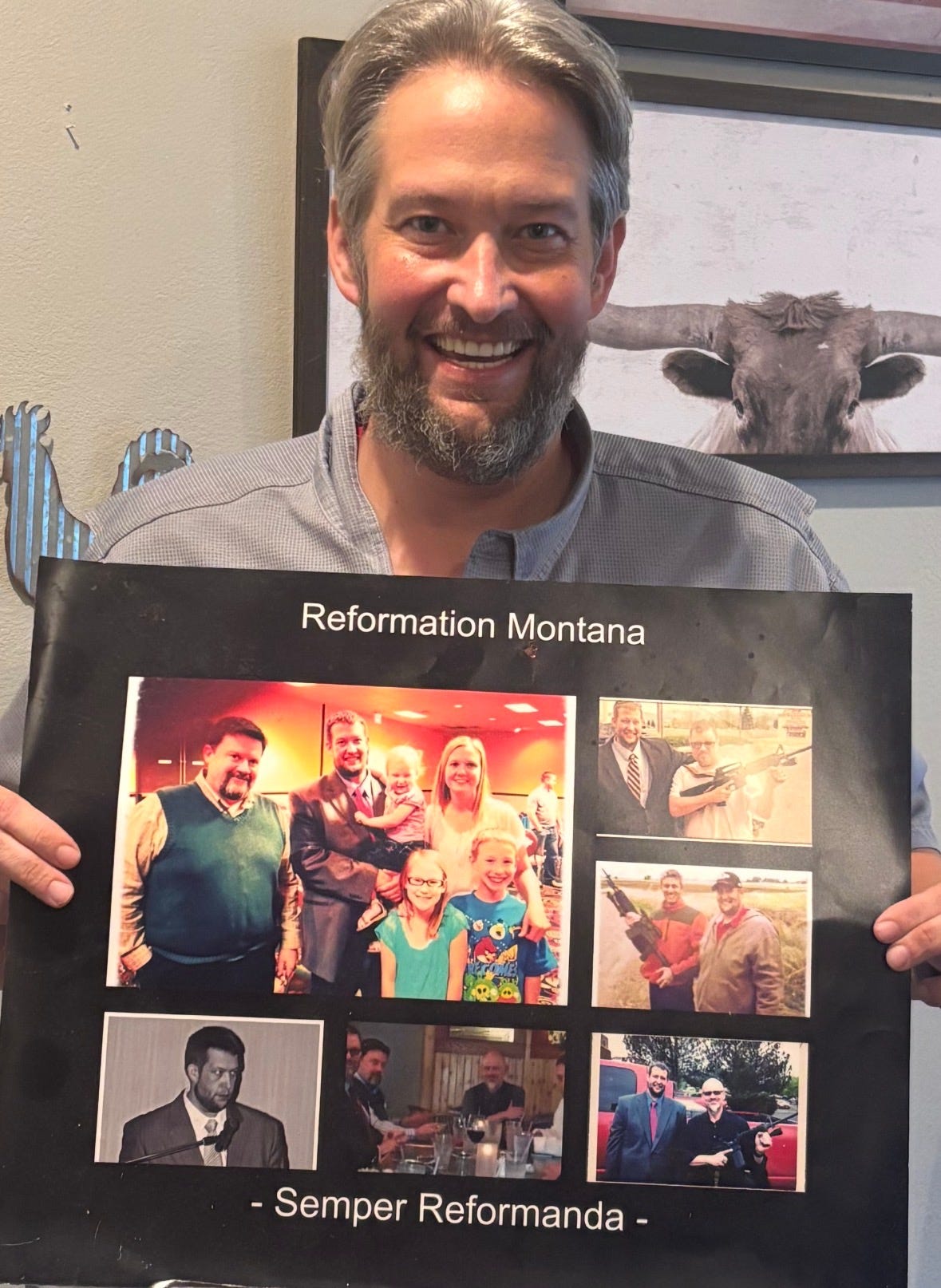
Whatever I had imagined those relationships to be, the question had been answered. JD Hall was dead, the funeral was apparently over, and nobody was waiting around for the resurrection.
I then spent the next two years almost entirely outside the world I had helped build. At the time, it felt like exile. In retrospect, it gave me something I could never have obtained while sitting inside the foxhole. I got altitude. From the top, a look down that you don’t get in the trench. It was eye-opening.
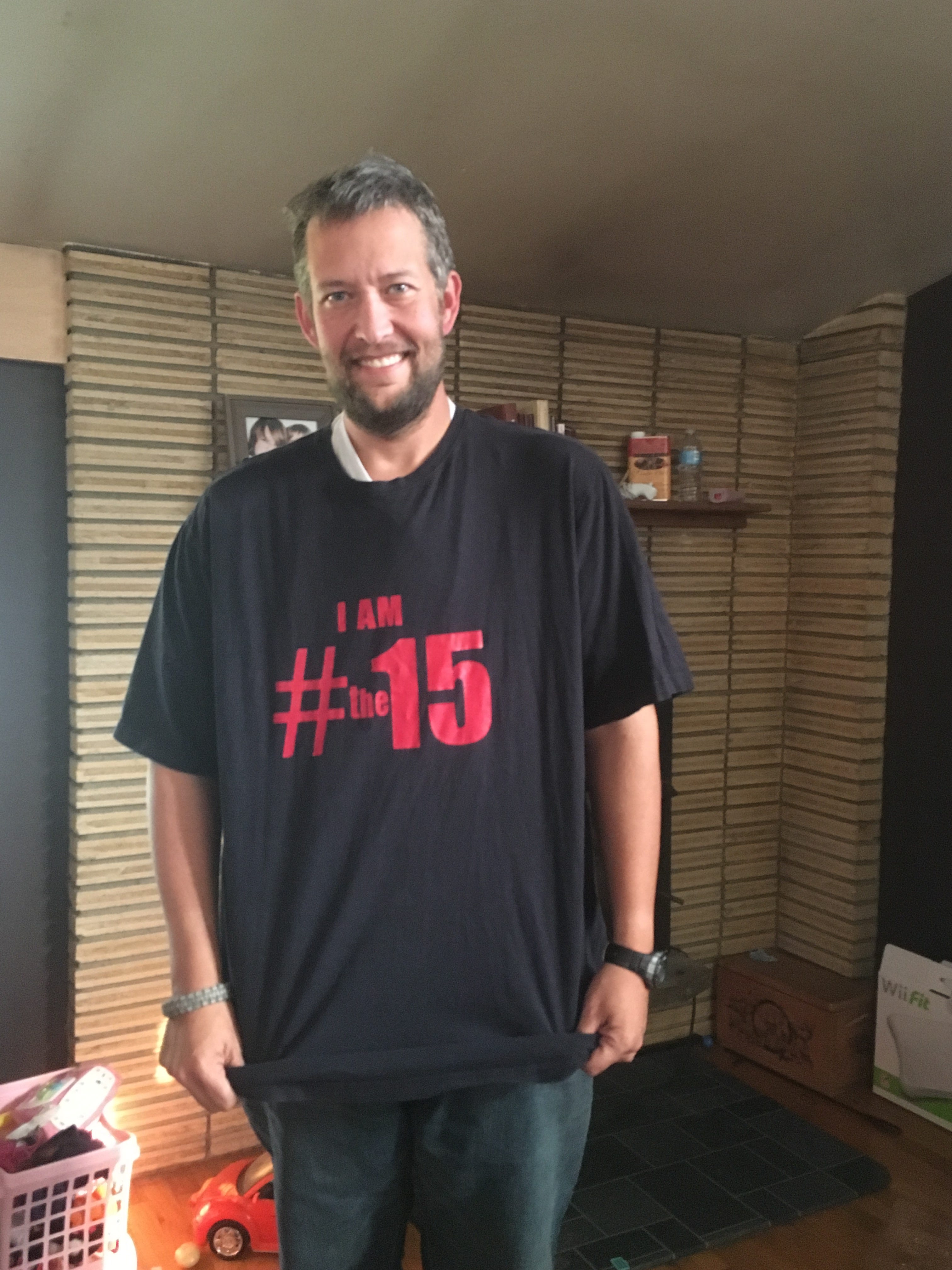
From 2022 through 2024, I watched nothing. It was too hurtful. I didn’t check in with what was happening in the world of evangelicalism. That was, until the Trump assassination attempt in Butler, when I made an X account to find out the real news of what was happening. And that’s when I got a look at a completely new evangelical landscape from the cheap seats. I felt like Rip Van Winkle. I watched old institutions wobble, alliances rearrange, controversies become irrelevant, new media ecosystems explode, and ordinary Christians begin having conversations that the respectable evangelical gatekeepers had not authorized and could not control. I discovered the difference between staring across a battlefield through a rifle sight and watching the same battlefield through the camera of a drone. It was the type of sheer disorderly chaos that I had tried for so many years to spark, and the Revolution we started in late 2014 called #The15 (read all about it at Baptist News Global here).
I wanted war. We started it. But during those two years, Big Eva had been conquered, routed, and cast into the outer darkness, while the lines for an entirely different war were already being drawn. That is the irritating thing about winning wars. History never has the decency to roll the credits when the enemy retreats. The smoke clears, everybody congratulates one another, and then somebody looks over the next hill and realizes another army is forming.
And when I came back, I had no desire to crawl back into the foxhole. Little did I know, however, that the very forces that eventually came to my side in that fight - Peters, Johnson, Rosebrough, White - most of whom were very slow to engage Big Eva directly until the very latter days of the war (they were too busy making fun of charismatics) which is when they went out front and took credit for it with conferences to put nails in its coffin a good five years after standing on the sidelines, silent - turned out to be fighting for different reasons. They didn’t want to kill the machine.
They wanted to run it.
This is the part some of my old friends (still friends) at Protestia, and apparently some of my old friends elsewhere, still haven’t understood. They see me refusing to join the latest firing squad against Joel Webbon and conclude that I must have compromised. They remember the old JD Hall. You know, the one who organized the Big Eva Resistance, and then happily stood behind the men who went to stand at the front of it. Somebody had suddenly identified the dangerous man, the discernment siren went off, everybody grabbed a rifle, and Polemics Santa came crashing through the wall like the Kool-Aid Man carrying ammunition.
GET THE RESEARCH LINKS AND EVEN MORE FOR FURTHER INVESTIGATION FOR EACH ARTICLE TOPIC. CLICK BELOW.

I know how that system works because I created it, in cooperation with a small handful of others.
But nobody stole me from the old guard. Nobody seduced me into some new camp. Joel Webbon did not lure me away from my friends. The old alliance was already dead when I returned, and one of the first things I did upon returning was publicly announce that I would no longer conduct polemics according to that system.
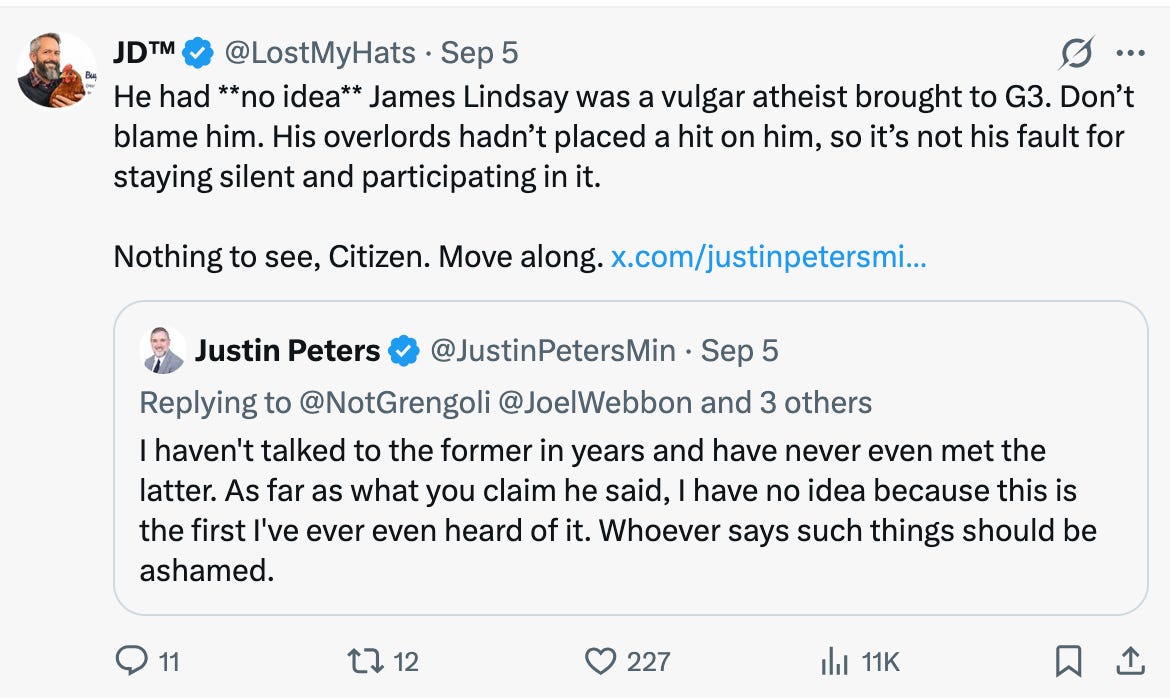
I gave fair warning - well in advance - that I wasn’t going to haul water for evangelical celebrities. I wasn’t going to inherit somebody else’s enemies. I wasn’t going to attack a man because the right people had decided he was dangerous, or defend a man because the right people had decided he was safe. That’s exactly why I stood down the minions and helped Michael O’Fallon pacify the natives over bringing James Lindsay into the fold, which honestly could not have happened with my resistance. I wasn’t about to be spending the rest of my useful life fighting whatever intramural battle happened to arrive on the evangelical discernment calendar that morning.
And most of all, I wasn’t going to be anybody’s gun for hire. I did not merely think this privately. I wrote it down.
October 24, 2024.
The Polemicist’s Manifesto. And it’s time to revisit it.
NOBODY LISTENED
Nobody listened, except for the readers who began to filter into Insight to Incite. And that was fine. I had not expected the evangelical polemics industry to read a manifesto announcing that the evangelical polemics industry needed to change and respond by pinning it to the refrigerator, especially penned by the guy they very much wished wasn’t back.
But the people who came with me understood what I was doing. Insight to Incite was deliberately different from Pulpit & Pen. I wasn’t interested in spending another fifteen years waiting for some pastor to say something stupid so we could spend three days discussing whether he should be invited to the next conference. I had done that. We had all done that. We had gotten extremely good at it. More importantly, we had won.
The old evangelical establishment that once exercised enormous power over what conservative Christians were permitted to say, who they were permitted to associate with, and which controversies required everyone’s immediate attention had been badly diminished. The Gatekeepers had their arms chopped off like that iconic scene from Monty Python and the Holy Grail. We had spent years shooting at those institutions, exposing their compromises, documenting their drift, and breaking the spell of their respectability. By the time I returned, much of the castle was rubble. And yet, some of my old friends were still firing cannonballs into it. In fact, most were still doing so.
That was what I saw in 2024.
The Populist Social Revival was already underway, and that was brand-spanking new. Millions of people who would never watch a G3 panel on doctrinal precision were suddenly talking about Christianity, masculinity, marriage, abortion, immigration, pornography, homosexuality, government, education, Israel, religious liberty, and whether America could survive without God. Men who had spent twenty years outside the church were listening to conversations about Christian civilization. The battlefield had moved from protecting evangelical institutions against theological infiltration to confronting an entire civilization that was suddenly asking questions Christians had answers for.
So I wrote, in the second point of the Manifesto, that polemics had to “stop focusing on personalities and start focusing on principalities.”
That was not a clever turn of phrase. It was marching orders.
The old model trained us to identify the bad man. Find the false teacher. Clip the sermon. Document the error. Name him, warn about him, and make sure everybody knew which conference organizers had committed the sin of standing within fifteen feet of him. There was a legitimate place for that work, and I had done more of it than almost anyone alive. But somewhere along the way, a tool became an industry, the industry became a culture, and the culture began requiring a steady supply of people to destroy.
I wanted out of that business. Not out of polemics. Out of that polemics.
I wanted to point all that accumulated theological ammunition outward. I wanted to take fifteen years of learning how to identify lies, trace networks, expose institutions, follow money, recognize propaganda, and communicate complicated theological questions to ordinary people, and use it against principalities larger than whichever evangelical had committed this week’s thought crime. I wanted to speak to the millions of people wandering through the wreckage of the old political and cultural order and tell them where the road actually ends. Which, incidentally, is Christ, who is King.
That required something the old system was never going to tolerate very well, and it definitely required us to stop asking it who we were allowed to talk to, who we were allowed to work beside, and which enemies we were required to inherit. That’s why points five and six of The Polemicist’s Manifesto were so serendipitous for the moment, looking back. They were the prediction I made after roughly five months of watching everything unfold online, catching up, and drawing out a battle plan in my head.
CALLED IT
Point five said that polemicists must become “utterly unconcerned with being gate-kept by any parachurch ministry or any celebrity aligned with a man-made institution,” because our actual ecclesiastical accountability belongs to our local churches under Christ. Then came point six, which was considerably more specific. I said we should “immediately brace for push-back by current theological gatekeepers who will view us as unbridled, or feel as they are losing us as their weapon or protection.”
Read that again if you need to. Seriously.
I did not predict that theological disagreements would continue to exist. You don’t have to be Nostradamus or the Witch of Endor to have managed that one. I predicted the nature of the coming disagreement. The problem would be that the old theological gatekeepers would regard independent Christian polemicists as unbridled, and they would react because they sensed they were losing people who had previously functioned as their weapon or protection. I used those words in October 2024 because I knew exactly how the machine worked, precisely because I had spent years inside it.
I chose the word carefully (I also worked on its phrasing for months before publishing, before I2I even existed, having no idea where I’d publish it). Meanwhile, a bridle does not tell a horse what is true. It tells the horse where to go. The question I was raising was not whether polemicists should have theological boundaries, ecclesiastical accountability, doctrinal standards, or pastors who can correct them. Of course we should. The question was who gets to hold the reins, and I had concluded that a collection of celebrity pastors, conference networks, parachurch ministries, favored apologists, and evangelical personalities had been holding reins that Christ never handed them. And, they were driving those reigns at breakneck speed toward the empty seats at Big Eva as fast as possible. Mid-Eva was trying to grow into their oversized Ed Stetzer pants. Some were even trying to replace Russell Moore at the ERLC with one of their own, instead of (metaphorically) burning it to the ground. The war was over, and they were all fighting for bounty.
That’s why they started to attack the XNats. They were worried they had gone to all the trouble to take it over, and now some new up-and-comers were rididng a populist wave of hungry Christian sentiment to take their place. They were threatened. Little did they know that the XNat leaders want nothing to do with running the institutions. They’re into building their own. It was pure projection on their part. If Doug Wilson wants to become to new Albert Mohler, or James White wants to become the new Russell Moore, let them.
That is why the word weapon appeared in the Manifesto. I had spent years being extremely useful to people who needed somebody attacked. Polemics Santa had a large audience, a high tolerance for incoming fire, and almost no instinct for self-preservation. Point me toward the controversy, hand me the documents, and stand back. It was an effective arrangement right up until I began asking whether the people pointing were always entitled to choose the target. By 2024, my answer was no.
I would investigate the man myself. I would read the argument myself. I would decide whether the controversy deserved oxygen. I would distinguish between an actual threat to Christ’s church and somebody violating the etiquette of the evangelical clubhouse. Sometimes my conclusion would agree with the old guard. Sometimes it would not. But nobody outside my local church was going to pull a bit into my mouth and jerk my head toward whichever Christian had become verboten because so-and-so says so.
And I knew what would happen when I said so. The very people I had helped defend - and had helped arm - would set sites on me, too, by extension. That’s how the Denunciation Game is played (read here for more).
I warned they would call it compromise. They would call it recklessness. They would say I had changed, lost discernment, gone soft, become tribal, become useful to dangerous people, or abandoned the standards I once defended. In other words, they would look at a polemicist they could no longer steer and call him unbridled. Twenty-three months later, here we are.
Joel Webbon has become the current target, and suddenly some of the same men, institutions, publications, and audiences from my former polemical world are demanding to know why I am not shooting. But I already gave the explanation. I gave it long before Christ Is King: America After Trump. I gave it before Alex Jones was announced. I gave it before anybody was clipping Alex Stein, counting naughty words, debating conference titles, or demanding that Joel Webbon explain which sinners may stand beneath three words printed on a convention-center banner. I gave it before there was any conceivable reason for anyone to interpret the Manifesto as a defense of Joel Webbon, who at the time, I did not know and had barely heard of.
I told you I was leaving the firing squad. And I told you the firing squad was going to be furious about it.
EXPECT ME TO FETCH
And now we arrive at Joel Webbon. For the last several weeks, I have watched almost the entire old routine reassemble itself around him. Different men have different objections, and I am not pretending every criticism is identical or equally stupid. Some hate Alex Jones. Some hate Alex Stein. Some hate James Fishback. Some think the words Christ Is King transform a political conference into something requiring the speaker qualifications of a presbytery meeting. Some think Joel has become reckless, compromised, dangerous, unserious, insufficiently respectable, or whatever adjective is currently stamped on the evangelical scarlet letter.
Fine. Make your argument. But what interests me is what happens next. Once enough of the correct people decide a man is dangerous, disagreement is no longer sufficient. Everyone else must disagree too. Failure to attack becomes defense. Friendship becomes complicity. Appearing on the same stage becomes endorsement. Refusing to join the denunciation becomes compromise. Eventually, the question stops being, “Is Joel Webbon wrong about this?” and becomes, “Why haven’t you attacked Joel Webbon yet?”
And there it is. That is the machine I described twenty-three months ago.
James White has been unloading on Joel. Phil Johnson has been after him. Justin Peters and Chris Rosebrough have joined the broader campaign against him from their respective corners. Men who spent years beside me in evangelical polemics have reached their conclusions about Webbon, and apparently some people still assume those conclusions should arrive in my mailbox with an invoice attached. They do not, I assure you.
I do not work for them. That is the possibility nobody remembers exists, I guess. I can like Joel, work with Joel, defend Joel when I believe he is being treated dishonestly, disagree with Joel when I believe he is wrong, and still never surrender the responsibility of reaching those conclusions myself. Christian friendship does not require becoming somebody’s defense attorney, and Christian discernment does not require becoming somebody else’s attack dog. Yet the old reflex is astonishingly durable. Polemics Santa is apparently still expected to fetch. Somebody throws Joel Webbon across the yard and waits for me to come running back with him between my teeth.
No. I’ve been there. Done that. Have the t-shirt.
And here is what makes the present controversy almost comically perfect. The Manifesto did not merely predict that evangelical gatekeepers would object when people stopped accepting their judgments. I predicted that they would experience this independence as losing a weapon. Now, almost two years later, the complaint directed at me is not principally that I have adopted some identifiable heresy. It is that I am not using my polemical weapons against the man they believe deserves them.
Nobody has demonstrated that I suddenly stopped believing the 1689. Nobody caught me denying justification by faith, baptizing infants, speaking in tongues, kissing the Pope’s ring, or selling prayer cloths on late-night television. The alleged compromise is relational. I am standing beside people I am supposed to stand against. I am refusing to inherit somebody else’s blacklist. In fact, in clearest possible terms, I affirm the person they hate.
And the current controversy could hardly have furnished a better demonstration. Joel’s critics are now arguing about who may speak at a political conference called Christ Is King, what the title communicates, if Alex Jones has exceeded the permitted number of conspiracy theories possible to be considered regenerate, whether Alex Stein’s vulgar comedy disqualifies him from appearing, and whether Christians who participate are obliged to withdraw. And they can ask those questions honestly after acknowledging this isn’t a Christian Purity conference about good theology. It’s a political coalition designed to tackle issues that its critics are terrified to touch with a ten-foot-pole because they are gutless, weak, effeminate, silly, irrelevant, irreverent men.
For example, one issue I deeply care about is the advancement, health, and survival of Western Civilization, including Western Civilization’s native sons. European-descendant peoples, in other words. This isn’t new. I’ve always believed this. Just ask the old-timers about the “Pulpit & Pen Confederate Flag Controversy of 2014 when Kofi Adu-Bo-Whatever-It-Is took confidential texts of one of our contributors, Seth Dunn, with a Confederate Flag at home. I didn’t run from it. I didn’t excuse it, either. It didn’t need to be excused. Heritage is a mighty fine thing. And that heritage, in particular, has been the vehicle and engine of world evangelization for 175 years, warts and all. I pled with people with tears in my eyes, during the BlackLivesMatter days, that if they keep pressing for social fracturing, it’s indeed going to fracture, and a point will come in time when we have to be concerned with our own self-interests, and will be right to do so, because of the Biblical right to self-defense. Well, here we are.
Now, imagine those guys voicing concern about White Demographic Replacement that is both industrialized and centrally planned. I mean, they might.
In 18 to 24 months.
But what I’m not going to allow is them inventing an ecclesiastical authority over other Christians while doing it. So, James White can tell us Joel is wrong. Phil Johnson can tell us Joel is dangerous. Protestia can publish every criticism it pleases. Jon Harris can make his case. Every one of them gets a microphone, an argument, and whatever persuasive power that argument possesses. They should do so (A) over an open Bible and (B) while explaining why this effort is substantially different than the looser religious alliances among not just Catholics, but with Mormons and Hindus like with similar coalitions, without ever voicing a single voice of dissent.
You know, like that time the years that James Lindsay was trotted in front of Mid-Eva like a show pony.
What none of them gets is a bridle to put on me, or anybody else.
That is the distinction I was trying to make in 2024, and apparently I was writing it for 2026. Somewhere along the way, evangelical discernment confused influence with jurisdiction. Men became accustomed to having their warnings treated like warrants, their suspicions treated like subpoenas, and their enemies treated like fugitives. Then they became surprised when Christians began asking to see the badge. I, for one, am asking to see the dang badge. And until somebody produces one signed by Jesus Christ, I’m not fetching anything.
UNBRIDLED
So yes, I changed. I said I was going to change, explained precisely how I was going to change, published eight points describing the change, predicted how the people accustomed to the old arrangement would react to the change, and then spent the next twenty-three months changing. Calling this “compromise” now is like watching me board a train for Missouri, waving goodbye as it leaves the station, and then accusing me of changing destinations when I step off in the Ozark Mountains. I told you so. Ahead of time.

What I did not change was my theology. I’m still the same stubborn Reformed Baptist who believes false doctrine should be exposed, and the moment the XNats do that, I’ll be the first to beat them like a red-headed step-child. I also think false teachers should be named, churches should practice discipline, pastors should guard their pulpits, and Christians should contend earnestly for the faith. I have not developed a sudden allergy to polemics. If anything, I want Christian polemics aimed at larger targets with heavier ammunition. I want to bring out the howitzer or maybe some anti-aircraft guns or some SAMS. It’s a real shame the Supreme Court says the Second Amendment doesn’t cover those, but for Polemics, I’m down with it.
What changed was my willingness to confuse evangelical influence with Christian authority. I’m going to ask you to be unbridled with me. By that, I mean that nobody at Grace to You, Alpha and Omega, Pirate Christian Radio, Protestia, G3, or anywhere else gets to tug the reins whenever he decides another Christian needs correcting. I already have a bridle. Christ placed it in the hands of the elders of my local church, and I am not accepting a second set because somebody has a podcast, a conference, a famous ministry, or a sufficiently impressive collection of theological scalps.
My scalp collection is bigger, anyway.
That does not make those men irrelevant. It makes them men. They can persuade me, correct me, warn me, rebuke me, or demonstrate that I am wrong. They should feel free, so long as they haven’t a hatchet still in my back. I have changed my mind before, and I will again. But an argument must arrive as an argument, not as an order disguised as one. The evangelical celebrity class can have my attention when it earns it. It cannot have my obedience.
And this is a way bigger than Joel Webbon. Two Webbon articles in a row is a lot, I’m aware. Don’t worry. Remember, I spent most of last week in a high-grade fever coma and have yet to figure out what’s happened in the world since I was last with you, and so today, I’m just writing about what’s in my head. Tomorrow’s article is going to be about Jewish space lasers. I kid you not.
Joel happens to be standing where the artillery is landing today. Tomorrow it will be somebody else, because the machine requires somebody else. That is precisely why I am not interested in spending the next decade determining my enemies by watching where everybody else’s guns are pointed. Sometimes they will be pointing at a wolf. Sometimes they will be pointing at a brother who said something stupid. Sometimes, like today, they will be pointing at a man who simply refused to salute.
This was the wager behind The Polemicist’s Manifesto. The great theological battles of the previous generation left us with an extraordinary arsenal. We learned doctrine. We learned apologetics. We learned how institutions drift, how language gets manipulated, how compromise advances by inches, and how respectable people protect it until somebody impolite produces the receipts. That arsenal was never supposed to become a museum where aging soldiers reenact the same battles forever.
I was with an oil man one time in Montana, giving him directions, when I told him, “Go straight.” He stopped the pickup, sighed deeply with his head down, put it in park, then looked at me, and said, “Nope. It’s ‘forward.’” He explained that, in oilfield speak, that phrase implies he’s gay. I thought he was joking at first, but he wasn’t, so I complied. “Forward.” I considered it a funny but respectable level of homophobia, imho.
Well, ladies and gentlemen…forward. A civilization outside the museum is crumbling, and coming down all around us.
Tom Buck complains that men like Alex Jones and Alex Stein undermine the public Christian character we claim to be fighting for. I understand the argument, but I think it confuses the kind of men required to defend a civilization with the kind of men you would invite over for dinner after church to sit with your children. I don’t know if you’ve ever watched The Fat Electrician, but we owe our nation’s liberty to God Almighty and a great many men you would not want at your dinner table. Dangerous men. Rough men. Men who drank too much, swore too much, fought too much, and occasionally possessed the social graces of a rabid raccoon. God has never restricted his providential use of men with seminary degrees. Sometimes civilization needs a theologian who can pass an elder exam. Sometimes it needs a man willing to run toward the gunfire. A Christian political coalition should know the difference. And I guess these days, I’m the latter, too.
There are millions of people asking questions (which I mentioned above) about God, government, sex, marriage, children, nation, race, technology, money, war, Israel, masculinity, authority, and the future of the West. Young men are discovering Christianity through political questions before they know enough theology to pronounce Westminster. People are wandering into the vicinity of Christ for bad reasons, incomplete reasons, confused reasons, and occasionally ridiculous reasons. My concern is not whether they entered through the approved evangelical door. My concern is getting them all the way to Christ.
That is where I said we were going in October 2024. And almost two years later, here we are. Meanwhile, Polemics Santa’s extremely lame superpower has struck again. No visions, just OSINT and the apparently astonishing ability to notice where everybody is walking before they arrive there. Despite that, I did not predict Alex Jones. That’s hilarious. Nobody could have predicted that. Take what you’re given, people. I certainly did not sit down in October 2024 and foresee evangelicals fighting over whether Alex Stein could tell dirty jokes beneath a banner reading Christ Is King (he better be stinking not, because I will heckle him live like when I got kicked off out of Jim Bakker’s studio, and will be dragged out again. Again. Again). But I predicted something much less specific and much more useful. I predicted what the old system would do when Christian polemicists stopped allowing it to choose their enemies for them.
So, please let me finish exactly how The Polemicist’s Manifesto finished twenty-three months ago. “Christ built this. Christ will finish it. Onward, upward, and get out of the way.”
Forward.
EVERY FUTURE POST THIS WEEK WILL BE PREMIUM. PLEASE SUBSCRIBE TO GET THE CONTENT.


